At Infinique Digital, we believe digital marketing is more than clicks, impressions, or rankings — it’s about building meaningful connections between brands and people.
Adajan, Surat, Gujarat 395009
Location
+91 77788 65587
Phone No
info@infiniquedigital.com
Email Id
How Long Does SEO Take? Real Timelines Explained (2026 Guide for Businesses)
One of the most common questions every SEO agency hears is:
“How long will SEO take to show results?”
The honest answer? SEO is not instant—it’s strategic, compounding, and long-term.
But that doesn’t mean it’s unpredictable.
In this guide, we break down realistic SEO timelines, what actually affects results, and how businesses can accelerate growth without unrealistic expectations.
Why SEO Takes Time (And Why That’s a Good Thing)
SEO is about building trust, authority, and relevance in search engines like Google.
Unlike paid ads, where results stop when the budget stops, SEO builds long-term organic visibility and sustainable traffic.
What Google Evaluates:
Website quality & technical health
Content relevance & depth
Backlink authority
User experience & engagement
Key Insight: SEO is not a one-time task—it’s an ongoing optimization process.
Realistic SEO Timeline Breakdown (Month-by-Month)
Month 1–2: Foundation & Setup Phase
What Happens:
Website audit (technical + on-page SEO)
Keyword research & competitor analysis
Fixing technical issues (speed, indexing, errors)
Setting up tracking tools (Analytics, Search Console)
Results Expectation:
Little to no visible traffic growth
Backend improvements only
This phase is critical—weak foundations delay results.
Month 3–4: Initial Growth Phase
What Happens:
Content creation begins (blogs, landing pages)
On-page SEO optimization
Internal linking structure
Initial backlink building
Results Expectation:
Keywords start ranking on pages 2–5
Slight increase in website traffic
Early signals appear, but no major leads yet.
Month 5–6: Momentum Building Phase
What Happens:
Consistent content publishing
Stronger backlink acquisition
Authority building in your niche
Results Expectation:
Keywords moving to page 1 (lower competition)
Noticeable increase in traffic
Initial leads/conversions
This is where businesses start seeing real ROI signals.
Month 6–9: Growth & Scaling Phase
What Happens:
Ranking for mid-competition keywords
Domain authority improves
Content starts compounding
Results Expectation:
Significant traffic growth
Consistent lead generation
Better keyword visibility
SEO starts becoming a reliable acquisition channel.
Month 9–12+: Authority & Dominance Phase
What Happens:
Ranking for competitive keywords
Strong backlink profile
Brand authority established
Results Expectation:
High organic traffic
Lower cost per acquisition (CPA)
Long-term consistent growth
At this stage, SEO becomes your strongest digital asset.
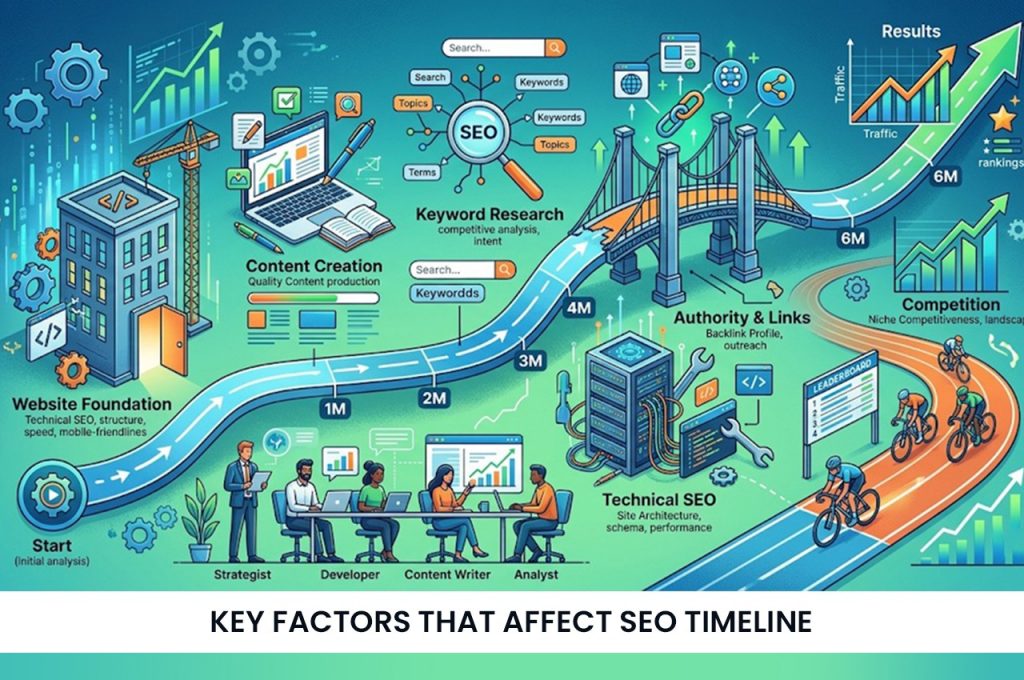
Key Factors That Affect SEO Timeline
Not all businesses see results at the same speed.
Here’s what impacts your SEO growth:
1. Website Age & Authority
New websites → Slower results (6–12 months)
Established websites → Faster growth (3–6 months)
Older domains with authority rank quicker.
2. Competition Level
High competition (real estate, healthcare, finance) → Longer timelines
Low competition niches → Faster rankings
More competitors = More effort required.
3. Keyword Difficulty
“Best hospital in Ahmedabad” → Highly competitive
“Affordable pediatric clinic in Ahmedabad” → Easier to rank
Long-tail keywords bring faster wins.
4. Content Quality & Consistency
Publishing 1 blog vs. 10 high-quality blogs per month creates a huge difference.
SEO rewards:
Depth
Relevance
Consistency
5. Backlink Strategy
Backlinks are still a major ranking factor.
High-quality backlinks → Faster authority growth
No backlinks → Slow progress
6. Technical SEO Health
Issues like:
Slow website speed
Broken links
Poor mobile experience
Can delay rankings significantly.
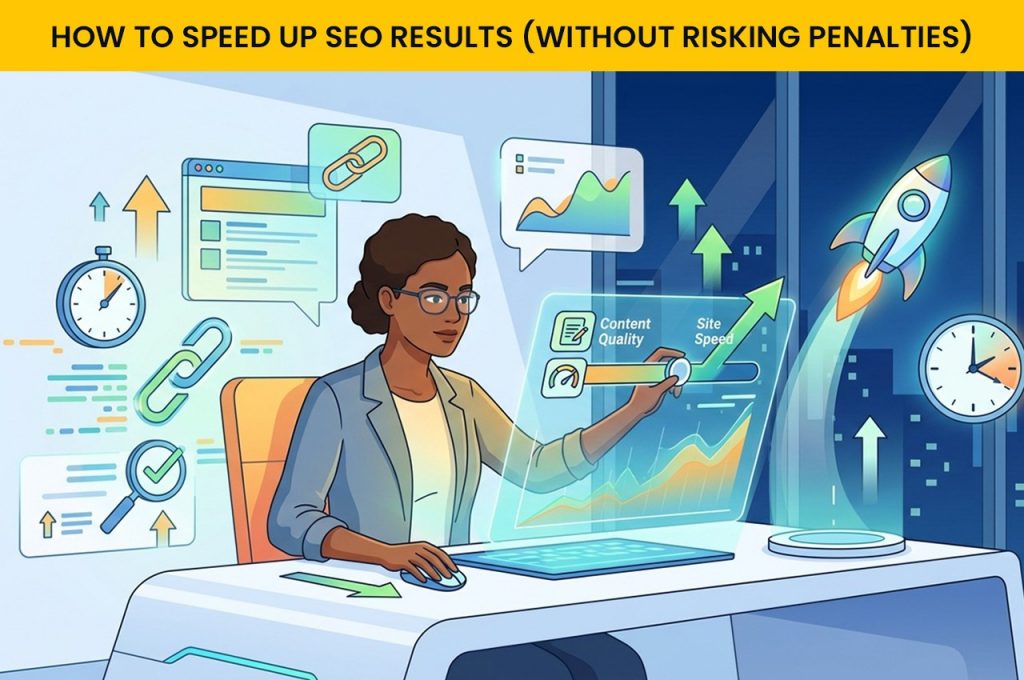
How to Speed Up SEO Results (Without Risking Penalties)
1. Target Low-Competition Keywords First
Build momentum with quick wins.
2. Invest in High-Quality Content
Focus on:
Problem-solving blogs
Service pages
Location-based pages
3. Build Strong Backlinks
Use:
Guest posting
Local directories
PR mentions
4. Optimize for Local SEO
Especially for local businesses:
Google Business Profile
Local keywords
Reviews
5. Combine SEO with Paid Ads
Use ads for short-term leads while SEO builds long-term growth.
Best Strategy: SEO + Ads = Immediate + Sustainable results
SEO vs Paid Ads: Timeline Comparison
Factor
SEO
Paid Ads
Results Speed
Slow (3–6 months)
Instant
Cost Over Time
Decreases
Increases
Sustainability
Long-term
Stops when ads stop
ROI
High (long-term)
Short-term
Final Thoughts: SEO is a Long-Term Growth Engine, Not a Quick Fix
If you expect SEO to work overnight, you’ll be disappointed.
But if you invest in it strategically, SEO becomes your most powerful and cost-effective marketing channel.
It builds trust
It generates consistent traffic
It reduces dependency on ads
In 2026, businesses that win are not the ones chasing quick hacks— they are the ones building long-term organic visibility.